Colorectal Cancer Screening Tests
Colorectal cancer screening is an essential part of routine health care. This post is not intended to be a guide for choosing the proper test but rather a guide to help understand and use the medical terms connected with the tests.
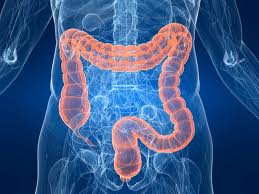
Two types of tests are:
- stool-based screening tests
- visual-based screening exams
Both can screen for both polyps and colorectal cancer.
Stool-based Screening Tests
Polyps and colorectal cancers can bleed and cause occult (hidden) blood in the stool (feces). Stool-based screening test checks for occult blood. Positive findings may indicate colon cancer or polyps in the colon or rectum — though not all cancers or polyps bleed, and colonoscopy may be recommended for further study.
Key Words
- FOBT – fecal (stool) occult bold test
- gFOBT – guaiac fecal occult blood test
- FIT – fecal immunochemical test, also called iFIT
- FIT-DNA – multitarget FIT test, also referred to as Cologuard (a brand of the test approved by the FDA)
 Stool-based tests, or FOBT (fecal occult bold test), use stool samples collected at home and sent to a lab for testing. FOBTs are less invasive, less expensive, and easier to do than visual exams; however, they must be done more often.
Two types of FOBT that have been approved by the FDA (Food and Drug Administration) are guaiac FOBT and FIT.
- Guaiac FOBT, also called gFOBT, uses the chemical guaiac to check for occult blood in the stool. However, guaiac may detect blood from foods such as red meat and blood from other organs such as the stomach, resulting in a higher rate of false positives than FIT.
- FIT (fecal immunochemical test) uses antibodies to detect blood in the stool. It only detects human blood from the large intestine. Therefore, medicine or food does not interfere with the test. It is more accurate and has fewer false positives than gFOBT. FIT-DNA, a type of FIT, is often referred to as Cologuard. It is multitargeted and detects occult blood and nine DNA biomarkers in three genes found in colorectal cancer and advanced precancerous adenomas in the stool. A computer program analyzes the results of the two tests (blood and DNA biomarkers) and provides a finding of negative or positive. Cologuard is a prescription based only and must be ordered by a healthcare provider.
Visual-based Screening Exams
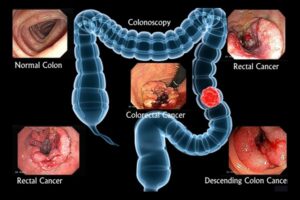
Visual Exams are used to view the colon and rectum for the presence of polyps and colorectal cancer. Three types of visual exams are used. Exams are done in a medical setting, preparation is required, and sedation may be ordered.
Key Words
- Colonoscopy – visual exam of the colon
- CT colonography – radiographic imaging of the colon
- Sigmoidoscopy – visual exam of the sigmoid colon and rectum
- Colonoscopy is a visual exam of the colon rectum for diagnostic purposes. Polyps can be removed during this procedure.
- Colonography, a virtual colonoscopy, uses X-rays and computers to produce images of the entire colon, which are displayed on a computer screen for the doctor to analyze. Polyps or cancers cannot be removed during this procedure.
- Sigmoidoscopy is a visual exam of the rectum and sigmoid colon. It is like a colonoscopy, except a shorter tube is used to view the lower portion of the large intestines. During a sigmoidoscopy, abnormal growths in the rectum and sigmoid colon can be biopsied. Sigmoidoscopy is not used as commonly as colonoscopy.
For more in-depth learning about the advantages and disadvantages of each screening test, click HERE.
Myrna LaFleur Brooks is the author of the medical terminology textbooks Exploring Medical Language and Basic Medical Language.
Read Other Medical Terms Posts >