GI series is a series of radiographic images (x-rays) of the gastrointestinal tract after the contrast medium barium has been administered. There are two types of GI series: upper GI series and lower GI series.
Upper GI series images the pharynx, esophagus, stomach, and duodenum. The barium is swallowed. An upper GI series may be used to determine the cause of nausea and vomiting, abdominal pain, and problems swallowing. It can show cancerous growths, hiatal hernia, ulcers, and gastroesophageal reflux (a symptom of gastroesophageal reflux disease or GERD).
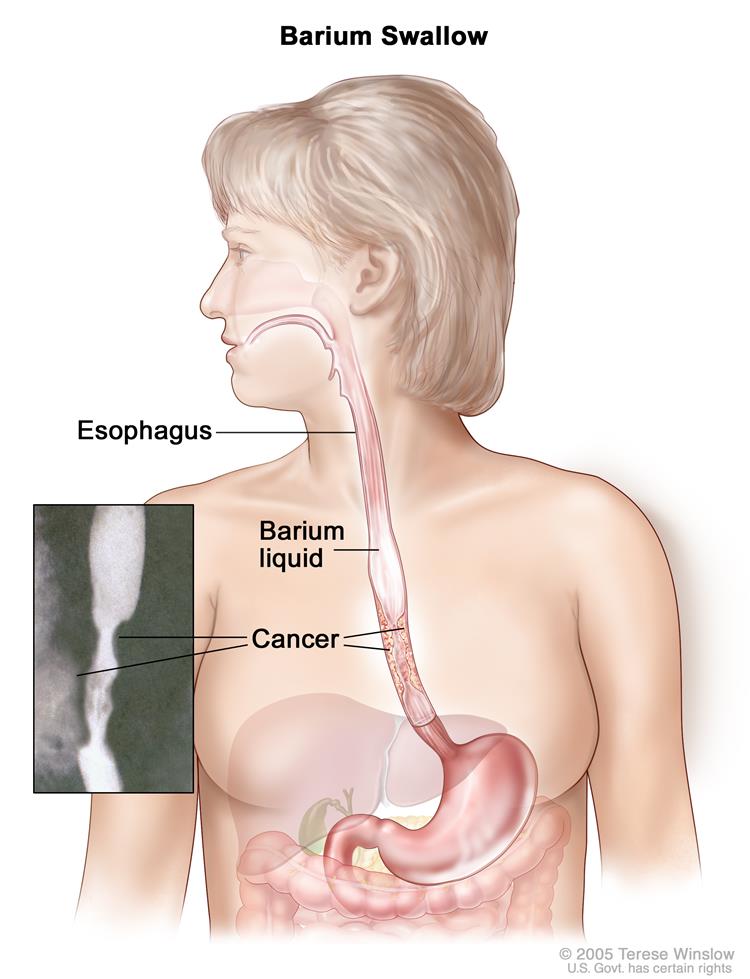
Upper GI is also referred to as barium swallow
Lower GI series images the large intestine. The barium is administered rectally. A lower GI series may be used to determine the cause of anal bleeding, change in bowel activity abdominal pain or chronic diarrhea. It can show cancerous growths, diverticula, fistula, ulcers, or polyps.
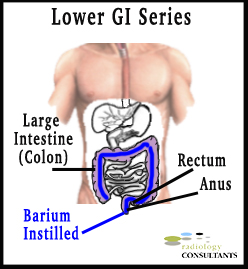
The GI (gastrointestinal) tract is a long continuous tube comprising the mouth, pharynx, esophagus, stomach, small intestine, large intestine, rectum, and anus.