Macular Degeneration
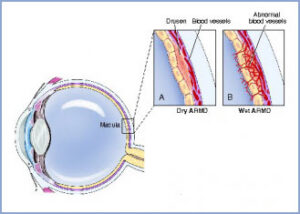
Macular degeneration, also called age-related macular degeneration (AMD), is a progressive eye condition in which the macula deteriorates over time, leading to loss of central vision. Peripheral (side) vision is usually preserved.
AMD is the leading cause of irreversible vision loss in adults over 60, affecting nearly 20 million Americans.
Key Facts About Age-Related Macular Degeneration (AMD)
- There are two main types:
- Dry AMD (most common)
- Wet AMD (less common but more severe)
- Most cases begin as dry AMD, and about 10–20% may progress to the wet form
- It can affect one or both eyes, and progression may differ between eyes
- AMD is a leading cause of vision loss in adults over 60
- The exact cause is not fully understood
- It is currently considered a chronic, incurable eye disease, though treatments can slow progression—especially for wet AMD
- The greatest risk factor is age, with most cases occurring in people 55 and older
For more information, visit AMDF, the Age-Related Macular Degeneration Foundation (AMDF).
Watch Other Videos on Our Medical Terminology Blog >
Image and Definition from the Textbook: Exploring Medical Language: A Student-Directed Approach
Myrna LaFleur Brook is the coauthor of the textbooks, Exploring Medical Language and Basic Medical Language.
Share this video with your friends.