A student reported continued difficulty distinguishing between the terms cholelithiasis and choledocholithiasis.
“What’s the difference?” she asked.
Excellent question!
Let’s take a closer look.
Word Parts and Combining Forms
Both terms can be defined in terms of their parts, so we will begin with word parts and combining forms (A combining form is a word root with a combining vowel attached, separated by a slash).
| Word Part/Combining Form | Definition |
| chol/e | gall, bile |
| choledoch/o | common bile duct |
| lith/o | stone, calculus |
| -iasis | condition |
Here, we observe that the combining forms for “gall, bile” and “common bile duct” are similar. I note that choledoch/o has a “d,” as in “duct,” in its definition.
This helps me remember that when I encounter a term formed with the combining form choledoch/o, it will in some way refer to the common bile duct.
Medical Terms
In looking at the terms through the meaning of their word parts and combining forms, we find the following general definitions:
chol/e/lith/iasis, condition of gallstones
choledoch/o/lith/iasis, condition of stones in the common bile duct
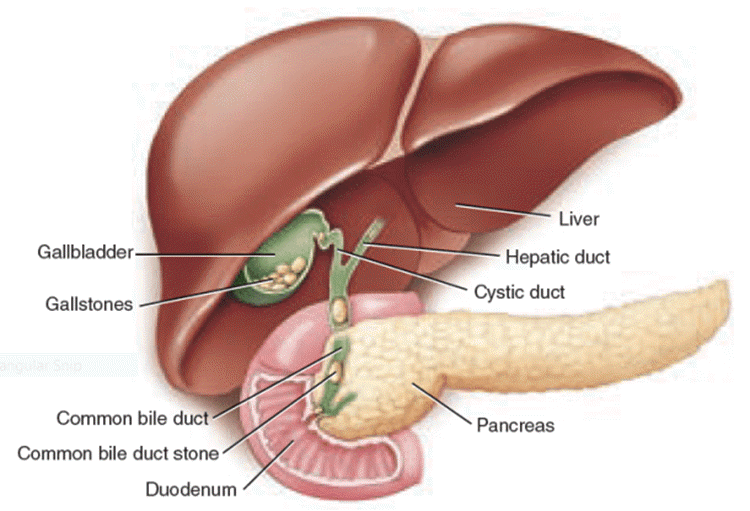
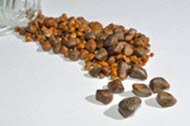
More specifically, cholelithiasis refers to gallstones formed in the gallbladder and occurring anywhere in the biliary tract (hepatic duct, cystic duct, and common bile duct). However, the most common location is the gallbladder.
Choledocholithiasis indicates the presence of one or more stones within the common bile duct, which is the passageway that carries bile from the gallbladder and liver to the duodenum.
From this, I can see that cholelithiasis indicates “what,” whereas choledocholithiasis provides more information, indicating “what and where.”
I hope we have taken a step toward clarifying the distinction between cholelithiasis and choledocholithiasis. May your studies go well!
Until next time,
Danielle
Read Other Medical Terms Posts > Read Other Teaching and Learning Tips >
Danielle
Danielle LaFleur Brooks is the Coordinator and Faculty of Teaching and Learning, Allied Health and Science, Community College of Vermont, and the author of the textbooks, Exploring Medical Language and Basic Medical Language.
Reference List
Dorland’s Illustrated Medical Dictionary, 32e. (2012). Philadelphia: Saunders/Elsevier.
Heuman, D.M. (2014). Cholelithiasis. WebMD LLC. Retrieved from http://emedicine.medscape.com/article/175667-overview#aw2aab6b2b1aa.
LaFleur Brooks, D. Levinsky, D. LaFleur Brooks, M. (2018). Exploring Medical Language, St. Louis: Mosby/Elsevier.
Common Sites… image from Exploring Medical Language, St. Louis: Mosby/Elsevier.
Like this post? Share it with your friends!